From Mountain Shade to Woodshop Light

Today we dive into ‘From Forest to Workshop: Handcrafted Alpine Woodworking Practices’, following the living journey from highland spruce and larch selection to quiet benches scented with resin. Expect practical field wisdom, careful milling traditions, patient air-drying, intimate hand tools, resilient joinery, and design shaped by snow, wind, and stone. Along the way, meet voices of shepherds, sawyers, and carvers who keep patience alive. Read on, ask questions, and share your own forest-to-bench rituals so our craft keeps echoing between ridgelines and workbenches.

Reading the Mountain Forest

Choosing the right tree begins long before a saw tooth touches bark. Walk the slope, feel soil underfoot, listen to wind patterns, and read crowns shaped by storms. Seek straight grain, tight rings, and healthy heartwood while leaving elders, wildlife trees, and nurse logs. Respect seasonal moisture swings and community needs. Share your own selection cues or questions in the comments; our collective field notes help preserve habitats, strengthen practices, and keep every future board honest about where it came from.

From Log to Plank: Traditional Milling

Turning a mountain log into boards demands timing, body sense, and respect for fiber direction. Village sawyers used waterwheels, frame saws, and long pits, reading the pith like a compass. Quartering for stability, live-sawing for yield, and riving where grain permits each carry consequences. Tell us how you break down logs, and which method sings best in your climate and shop.

Seasoning and Silence: Air-Drying in the Alps

Reading Checks and End Grain

End grain is an honest diary. Watch for hairline checks tightening, medullary rays flashing like frost, and color shifts at the sapwood boundary. Restrain panic; small movement teaches. Tell us when you trim ends, when you flip stacks, and how you balance impatience with the discipline that truly builds heirlooms.

Wind, Shade, and Time

Sun scorches promise into waste if you rush exposed drying on thin boards. Choose shade with steady air and generous spacing, sweeping snow from pathways while leaving piles unburied. Describe your regional microclimates, barn tricks, and patient rituals that make planks sing under a plane rather than scream under clamps.

The Patient Board

A chairmaker once pinned a note to a stubborn larch: 'Not ready; check again next winter.' He waited, planed, and finally smiled at ribbons bright as winter sun. Share your stories of waiting long and winning; endurance remains the sharpest tool no catalog sells.

Tools with Soul: Planes, Axes, and Knives

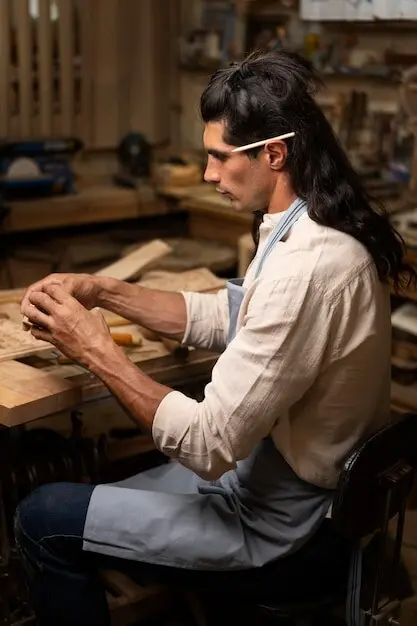
A bench whispers through tools shaped by hands, not factories alone. Wooden-bodied planes swell and shrink with seasons, broad axes swing like pendulums, and drawknives reveal curves sleeping within bark. We trade jigs for judgement, and shortcuts for sensitivity. Tell us which tool changed your work forever, and why its handle remembers your grip.
Tap, listen, tap again. Iron projection lives in half-moons of sound across the sole. Skew for a whisper, ease the wedge, and feel shavings warm your fingers. Share your tuning rituals, from candle soot on the mouth to burnished throats that make difficult boards behave like courteous guests.
Grind slightly convex, let the bevel guide, and trust your stance more than brute force. With every hewn facet, the log reveals intent. Note how knots deflect, how frost stiffens fibers, and how the axe hums. Compare edges, handles, and grips below; together we refine technique without dulling tradition.

Joinery that Holds Through Winters

Cold snaps test every interface between wood fibers. Drawbored tenons pull shoulders tight when glue shivers, dovetails shrug at racking, and tapered pins settle deeper with time. Cut true, pre-fit patiently, and trust wooden pegs more than bravado. Ask questions about tolerances or seasoning effects; experience shared now saves creaks later.

Designing with Grain and Landscape

Carving Motifs from Peaks

Study ridgelines at dusk, where shadows simplify chaos into clean, readable curves. Transfer those rhythms to chip-carved borders, door panels, and chair crests. Share layout methods, preferred knives, and how you decide between restraint and exuberance so the story reads clearly without shouting over functional proportions.

Finishes from Pine and Casein

Study ridgelines at dusk, where shadows simplify chaos into clean, readable curves. Transfer those rhythms to chip-carved borders, door panels, and chair crests. Share layout methods, preferred knives, and how you decide between restraint and exuberance so the story reads clearly without shouting over functional proportions.

Repair Culture and Heirlooms

Study ridgelines at dusk, where shadows simplify chaos into clean, readable curves. Transfer those rhythms to chip-carved borders, door panels, and chair crests. Share layout methods, preferred knives, and how you decide between restraint and exuberance so the story reads clearly without shouting over functional proportions.

Lorisentovirozunodarilivomira
Privacy Overview

This website uses cookies so that we can provide you with the best user experience possible. Cookie information is stored in your browser and performs functions such as recognising you when you return to our website and helping our team to understand which sections of the website you find most interesting and useful.